Monday, August 01, 2011

Unfair credit card debt collection practices and their sanctions under BSP Circular No. 702, Series of 2010

In my blog post titled “Did the Supreme Court order all credit card companies to reduce their interest rate of 3% monthly and penalty fee of 3%?” I discussed these topics:

Supreme Court ruling in Macalinao vs. BPI: 3% monthly or 36% yearly interest is excessive, unconscionable, and exorbitant

What to do if your credit card company is suing you

If the principal amount of the debt is below one hundred thousand pesos, you do not need a lawyer

Can a person be charged criminally for non-payment of credit card bills?
Some tactics used by credit card companies or their agents in trying to collect are:

(1) sending a photocopy of the complaint for collection or “sum of money” prepared by the company’s lawyer and making the card holder think that a case has already been filed in court; or

(2) in situations where the credit card holder is a teacher, calling up the school principal or department head about the teacher’s delinquent account; or

(3) calling up, verbally abusing, and humiliating the card holder.

Unfair collection practices

The Bangko Sentral ng Pilipinas “Manual of Regulations for Non-Bank Financial Institutions” (MORNBFI, Subsections 4320Q.14, page 136, and 4301N.14, page 810) classifies the following as unfair collection practices:

1. The use or threat of violence or other criminal means to harm the physical person, reputation, or property of any person;

2. The use of obscenities, insults, or profane language which amount to a criminal act or offense under applicable laws;

3. Disclosure of the names of credit cardholders who allegedly refuse to pay debts;

4. Threat to take any action that cannot legally be taken;

5. Communicating or threat to communicate to any person credit information which is known to be false, including failure to communicate that a debt is being disputed;

6. Any false representation or deceptive means to collect or attempt to collect any debt or to obtain information concerning a cardholder; and

7. Making contact at unreasonable/inconvenient times or hours which shall be defined as contact before 6:00 A.M. or after 10:00 P.M., unless the account is past due for more than sixty (60) days or the cardholder has given express permission or said times are the only reasonable or convenient opportunities for contact.

If you are a school principal or department head and you receive a telephone call from collection agents about your teacher’s alleged delinquency, tell them that (1) they are violating the BSP regulation, and (2) you will encourage the teacher to file a complaint against them for unfair collection practices.

If you are the card holder and you were verbally abused by the card company’s staff or its collecting agent, you should file a complaint with the BSP’s Financial Consumer Affairs Group.

Additional protection for credit card holders under BSP Circular No. 702, Series of 2010

Section 4 of this circular released on December 15, 2010 amended the Manual of Regulations of Banks (Subsection X320.14) and MORNBFI, (Subsections 4320Q.14 and 4301N.14). The circular applies to all credit operations of banks and other BSP-supervised financial institutions to better protect all financial consumers, including credit card holders.

Sections 3 and 4 of the circular require credit card companies to:
[1] notify the card holder in writing of the endorsement of the collection to an agency at least seven days before the actual endorsement;

[2] give the defaulting credit card holder the name of the agent assigned to the account once they have endorsed the collection to a third-party;

[3] change all disclosure documents and marketing materials so that they are printed in plain language and in bold black letters against a white background using the Arial font and a minimum 12 point font size.
These new requirements protect the credit card holders:

  • by giving them enough time to consider what actions to take,
  • from being harassed by an unscrupulous collection agent who might use aliases or pseudonyms in order to avoid the sanctions for using unfair practices; and
  • by providing them with easily understood documents from the credit card companies.
Sanctions for credit card companies or their collection agents

The sanctions for unfair collection practices under Section 6 of the circular are:
First offense: Reprimand for the directors/officers responsible for the violation.

Second offense: Disqualification of the bank concerned from the credit facilities of the BSP except as may be allowed under Section 84 of R.A. No. 7653 (“New Central Bank Act”).

Subsequent offenses:
  • Prohibition on the bank concerned from the extension of additional credit accommodation against personal security; and
  • Penalties and sanctions under Sections 36 and 37 of RA 7653
Where to file the complaint for unfair collection practices

For further clarification and inquiries, please contact the
Financial Consumer Affairs Group, Supervision and Examination Sector, Bangko Sentral Ng Pilipinas, 5th Floor, Multi-Storey Building, BSP Complex, A. Mabini St., Malate, Manila; e-mail address: consumeraffairs@bsp.gov.ph; Tel. Nos.: Direct Line: (+632)523-3631; Trunkline (+632)524-7011 local 2584

Practical and legal problems with BSP Circular No. 702, Series of 2010

[1] Shrewd and unscrupulous collection agents won’t use their office phone to call up the card holder or the school principal. Having caller ID
won’t matter then. The agents can also say that it wasn't them who called up.

[2] Section 4 provides that the credit card company must notify the card holder in writing of the endorsement of the collection to an agency at least seven days before the actual endorsement. Does it mean sending the written notice by ordinary mail, registered mail, or personal service on the card holder? To prevent any circumvention or confusion, the circular should have provided instead that the notification must be made by registered mail at least seven days before the actual endorsement. Or, to really provide protection to the card holder, the circular should have required sending the notice by express registered mail.

[3] Section 6 states that “violations shall be subject to any or all of the following sanctions depending upon their severity.” The phrase “any or all of the following sanctions” is legally incorrect since the circular provides that the sanctions are to be imposed on a successive basis (first offense, second offense, subsequent offense). For example, the sanction of “Prohibition on the bank concerned from the extension of additional credit accommodation against personal security” cannot be imposed if the violation is only a first offense.

The phrase “depending on their severity” is a misplaced modifier. Does “depending on their severity” refer to the sanctions or to the violations? If the phrase refers to the violations, then the sentence should be edited to read “Depending on their severity, violations shall be subject to any or all of the following sanctions”.

Also, the phrase “depending upon their severity” creates a legal problem. Does it mean, for example, that “making contact at unreasonable/inconvenient times or hours” less severe than the “use or threat of violence or other criminal means to harm the physical person, reputation, or property of any person”?

Consider this situation: A credit card company has committed a third offense of unfair collection practice. The penalty prescribed by the circular is “Prohibition on the bank concerned from the extension of additional credit accommodation against personal security”. But if the violation, for example, is the less severe “making contact at unreasonable/inconvenient times or hours”, does this mean the BSP has the discretion to impose the lighter penalty of reprimand even if it is already a third offense?

[4] Section 3 of the circular requires that the table of fees, penalties and interest rates, and reminder to the cardholder in disclosure documents and marketing materials must be “printed in plain language and in bold black letters against a white background using the Arial font and a minimum 12 point font size”. But aside from the required typography, the circular does not discuss what “plain language” is or provide guidelines for the credit card companies to follow. (The circular itself is not written in plain language; I have posted my Plain Language before and after comparisons of this circular.)
Please read my posts:

[1]
Plain English, Plain Language or Plain Writing for government offices and private companies in the Philippines

[2]
BSP Circular No. 702, Series of 2010 (Plain English / Plain Language revisions)

Note: In the Flesch ease of reading scale, the higher the score, the more understandable the text is. A score between 30 to 40 means a text is “very difficult” to understand; between 40 to 50 (“difficult”); between 50 to 60 (“fairly difficult”); between 60 to 70 (“standard”); and between 70 to 80 (“fairly easy”). You can use MS Word’s Spelling and Grammar tool to check the Flesch readability score of any document.

To learn how the Flesch reading ease test score is calculated manually, please read paragraph (5) of the Florida Readable Language In Insurance Policies Law (Florida Stat. Ann. § 627.4145).

The only BSP document with a description of “plain language” is MORB Volume 2, Appendix 13 (page 229). The description isn’t from the BSP but from a Securities and Exchange Commission document titled “New Rules on the Registration of Long-Term Commercial Papers”. In the section on “Sales and Marketing Guidelines for Derivatives”, the SEC states:
For non-sophisticated clients, a bank should adopt a suitability statement explaining simply and clearly why the product offered is viewed suitable, considering the client’s needs and preferences. To ensure the statement will be effective, a bank should consider the following features:

Simple and plain language: when technical terms need to be incorporated, they should be explained if the client is unlikely to understand their meaning; and

Concise and clear messages: lengthy explanations and extensive statements are likely to reduce the effectiveness of the statement and make the client less likely to read the statement properly.
But this description is so lacking in detail; it is also merely a recommendation. What “simple and plain language” is varies from person to person, and Circular No. 702 does not provide a way of measuring if the credit card companies are complying with the plain language requirement. What’s needed is an objective criterion of what constitutes “plain language” in order to protect the card holders.

We can learn from the experience of US states like Colorado, Nevada, Montana, New Mexico, Nebraska, North Carolina, New Jersey, and Rhode Island.
These states require that insurance policies (auto, life, health) and legal documents in general must have a minimum Flesch reading ease test score of 50. Colorado laws on the use of plain language are:

Beginning in August 2010, Rhode Island requires for all health insurance policies a Flesch reading ease test score of 65, the highest in the US.

Other US laws that provide subjective and objective criteria to ensure that consumers are protected are:

  • Connecticut Plain Language Law (Conn. Gen. Stat. § 42-152, promulgated in 1980) mandates that every consumer contract entered into after June 30, 1980, must be written in plain language. A contract is written plainly if it meets either the plain language test (subsection b) or an alternative objective test (subsection c).
  • Pennsylvania Plain Language Consumer Contract Act (Pa. Stat. Ann. tit. 73, § 2201, promulgated in 1993) provides a general rule, language guidelines, and visual guidelines to ensure that consumer contracts are easy to read and understand.
The BSP should consider adopting a criterion for readability based on these laws.

Tuesday, July 26, 2011

Even if Filipinos get married abroad where divorce is legal, they cannot later on get a divorce that is recognized here in the Philippines

Summary: Filipinos who get married in countries where divorce is valid cannot obtain a divorce later on, because of Article 15 of the New Civil Code of the Philippines. (The divorce may be valid in that country where they got married or where they got divorced. But the divorce will not be recognized here in the Philippines.)

Related discussions: “Divorce obtained abroad by a Filipino citizen against alien spouse recognized in the Philippines” and “The right of a divorced Filipino spouse to remarry under Article 26 of the Family Code

Last night, my sister brought home a tabloid; in it, a columnist discussed some people’s suspicions as to why Piolo Pascual reportedly wants to marry KC Concepcion abroad. The reason, according to these people, is that there is no divorce in the Philippines. They say that if Piolo and KC (or any Filipino, for that matter) get married in a place where divorce is legal, they will be able to get a divorce later on since Philippine law does not apply abroad.

This reasoning is wrong.

Getting married abroad where divorce is legal will not enable Filipinos to validly get a divorce later on. Why? Art. 15 of the New Civil Code of the Philippines is the reason. The article states:
Laws relating to family rights and duties, or to the status, condition and legal capacity of persons are binding upon citizens of the Philippines, even though living abroad.
Simply stated, Philippine laws on marriage, obligations between husbands and wives, parental authority over children, etc. are obligatory (binding) upon Filipinos wherever in the world they may be.

(The divorce may be valid in that country where they got married or where they got divorced. But the divorce will not be recognized here in the Philippines.)

Principle of “lex loci celebrationis”

This Latin expression simply means “if a marriage is valid in the country where it is celebrated, it is valid here in the Philippines”. Art. 26, paragraph (1) of the Family Code of the Philippines states:
All marriages solemnized outside the Philippines, in accordance with the laws in force in the country where they were solemnized, and valid there as such, shall also be valid in this country, except those prohibited under Articles 35 (1), (4), (5) and (6), 36, 37 and 38.
For example, if a Filipino gets married (either to a fellow Filipino or to a foreigner) in a country where the marriage ceremony isn’t the same as in the Philippines, it is still considered valid here.

But the principle of “lex loci celebrationis” does not apply in situations where the Family Code has declared certain “marriages” as incestuous, bigamous, or void for reasons of morality or public policy. Thus, a marriage between Filipinos who are first cousins may be validly solemnized in some countries but such a marriage will not be recognized as valid here in the Philippines. Also, a marriage by a Filipino below 18 years of age may be valid in other countries but not here in the Philippines.

(Please take note that “lex loci celebrationis” applies to marriage, not divorce.)

Question: If a Filipino gets married abroad but the documents are not filed with the NSO through the Philippine embassy or consulate, is the marriage valid?

Answer: Yes, the marriage is valid for two reasons:

1. Lex loci celebrationis;

2. The marriage contract or certificate is not an essential or formal requisite of marriage under the Family Code.

Thursday, July 14, 2011

Legal Procedures 26: After the last pleading or motion

Supreme Court materials on the new system known as “Face-to-Face Trial” A.M. No. 14-03-02-SC, March 8, 2014 that’s meant to speed up the resolution of case (external link)

(Please surf to the complete list of available PDFs on legal procedures in criminal and civil cases.)

1. After the last pleading is filed, the court decides on either one of the following:
A. Rendering of judgment based on the pleadings, or a summary judgment; or

B. Scheduling of the pre-trial conference upon motion of the plaintiff.
2. Judgment on the pleadings (Rule 34); Summary judgment (Rule 35)

The plaintiff files a motion for judgment on the pleadings (complaint and answer), or a motion for summary judgment (pleadings, affidavits, depositions and admissions of the parties).

If the court grants the motion, it renders judgment. But if the court denies the motion, then the pre-trial conference is scheduled.

3. The pre-trial conference is scheduled upon motion of the plaintiff. The motion states the desired day for the pre-trial. In practice, at least two dates must be suggested to accommodate the schedule of the court and of the opposing lawyer. The court is not bound by the suggested date.

After the defendant has filed the Answer, some judges issue an order scheduling the pre-trial conference. If you are a brand-new lawyer, make it a habit to talk to the court staff about the judge’s preferences or ways of doing things.

Note:In some cases, upon the filing of the complaint, the plaintiff may ask the court to issue a temporary restraining order (TRO) and writ of preliminary injunction, requiring a party to either refrain from doing something or to perform a particular act.

Within 24 hours after receiving the records of the case or the sheriff’s return, the trial judge must grant or deny the application for a TRO. If granted, it is good only for 20 days and is automatically lifted after such period. During the effectivity of the TRO, the court may hear the petition for a writ of preliminary injunction. If the injunction is granted, it is effective for the terms and conditions specified by the court.

Please read my post “The ABS-CBN versus Willie Revillame case: What is a TRO?”.

Saturday, July 09, 2011

BSP Circular No. 702, Series of 2010 on protection of credit card holders (Plain English / Plain Language revisions)

US laws with subjective and objective criteria for readability:

[1] Paragraph (5) of the Readable language in insurance policies (Florida Stat. Ann. § 627.4145) on how the Flesch reading ease test score is calculated manually.
[2] Connecticut Plain Language Law (Conn. Gen. Stat. § 42-152, promulgated in 1980): alternative subjective and objective tests for readability.[3] Pennsylvania Plain Language Consumer Contract Act (Pa. Stat. Ann. tit. 73, § 2201, promulgated in 1993): language and visual guidelines for readability.
Notes: (1) Please read my post “Plain English, Plain Language or Plain Writing for government offices and private companies in the Philippines.” (2) I conduct seminars for government offices or private companies that want to train their staff in Plain English. Please email me at gtgalacio@yahoo.com or text 0927-798-3138 for details. (3) For interactive grammar exercises, please visit my “Better English resources and exercises” website; I also have interactive quizzes on Plain English / Plain Language. (4) If the tables do not look right, try using Mozilla Firefox or Google Chrome. (5) These revisions are my own and are used only to illustrate Plain English principles. If there are conflicts between my revisions and the official BSP circular, you must follow the circular.

BeforeAfter
Subject: AMENDED REGULATIONS TO ENHANCE CONSUMER PROTECTION IN THE CREDIT CARD OPERATIONS OF BANKS AND THEIR SUBSIDIARY OR AFFILIATE CREDIT CARD COMPANIESSubject: Amended Regulations to Enhance Consumer Protection in the Credit Card Operations of Banks and their Subsidiary or Affiliate Credit Card Companies

Plain English / Plain Language revisions:
The circular wanted to emphasize the subject matter’s importance by using all caps. But, as Bryan Garner, editor in chief of Black’s Law Dictionary, points out, “the effect of using all caps is to make the text harder to read and understand.” (Michigan Bar Journal, March 2010). Garner suggests using boldface or putting the text in a box.

Using all caps also leads to typographical errors since the spell check tool of some word processing programs doesn’t work with text in all caps.

Most people think that formatting in all caps makes a text conspicuous. But the US 9th Circuit Court of Appeals in its 2002 ruling in Darlene M. Bassett vs. American General Finance, Inc. (285 F.3d 882) debunked this claim about conspicuousness and the use of all caps:
[1] The BAP was troubled that the right-to-rescind statement is in lower case, but there is nothing magical about capitals. True, the UCC specifies that “[a] printed heading in capitals” is normally conspicuous. U.C.C. § 1 201(10) (emphasis added). This has given rise to the canard that all language in capitals is automatically conspicuous, and the fallacy that language not in capitals isn't conspicuous.

[2] The use of capitals as a talisman of conspicuousness has survived intact despite decades of improved literacy and technology. Even some web page “click-through” agreements have clauses written in capitals, though there are better ways of making text stand out in a web browser window. (Specht v. Netscape Communications Corp)

[3] Lawyers who think their caps lock keys are instant “make conspicuous” buttons are deluded. In determining whether a term is conspicuous, we look at more than formatting. A term that appears in capitals can still be inconspicuous if it is hidden on the back of a contract in small type. (Sierra Diesel, 890 F.2d at 114)

[4] Terms that are in capitals but also appear in hard-to-read type may flunk the conspicuousness test. (Lupa v. Jock’s)

[5] A sentence in capitals, buried deep within a long paragraph in capitals will probably not be deemed conspicuous. Formatting does matter, but conspicuousness ultimately turns on the likelihood that a reasonable person would actually see a term in an agreement. Thus, it is entirely possible for text to be conspicuous without being in capitals.
Plain English / Plain Language revisions:
“Pursuant to” is legalese; it’s better to use “under” or “in accordance with” according to “Plain English Lexicon” by Martin Cutts.

I deleted “hereby.” Cutts says about this word: “Liked by lawyers for its claimed ‘performative’ role in phrases like ‘I hereby declare...,’ but many legal documents manage without it.”

BeforeAfter
Pursuant to Monetary Board Resolution No. 1728 dated 02 December 2010, the provisions of the Manual of Regulations for Banks (MORB) and the Manual of Regulations for Non-Bank Financial Institutions (MORNBFI) are hereby amended, as follows:Under Monetary Board Resolution No. 1728 dated 02 December 2010, the provisions of the Manual of Regulations for Banks (MORB) and the Manual of Regulations for Non-Bank Financial Institutions (MORNBFI) are amended, as follows:

Plain English / Plain Language revisions:

I deleted “hereby” and “thereof.” Plain English equivalent of “thereof” is “of it” (“Plain English Lexicon” by Cutts).

In Version 1, I retained the modifying phrase “on the requirement for banks/quasi-banks with credit card operations, to have written policies, procedures and internal control guidelines” but in Version 2, I removed it completely.

BeforeAfter
Section 1. The second paragraph of Subsection X320.2 of the MORB, and Subsections 4320Q.2 (2008-4337Q.2) and 4301N.2 of the MORNBFI on the requirement for banks/quasi-banks with credit card operations, to have written policies, procedures and internal control guidelines is hereby amended so as to delete Item “d” thereof.Version 1

Section 1. The second paragraph of Subsection X320.2 of the MORB, and Subsections 4320Q.2 (2008-4337Q.2) and 4301N.2 of the MORNBFI on the requirement for banks/quasi-banks with credit card operations, to have written policies, procedures and internal control guidelines is amended so as to delete Item “d”.

Version 2

Section 1. Item “d” of the second paragraph of Subsection X320.2 of the MORB, and Subsections 4320Q.2 (2008-4337Q.2) and 4301N.2 of the MORNBFI is deleted.

Plain English / Plain Language revisions:

For obligations, “shall” should be replaced by “must.” Garner says: “The meaning of ‘shall’ changes from sentence to sentence. Courts have held that ‘shall’ can mean has a duty to, should, is, will, or may.”

BeforeAfter
Banks/quasi-banks and their subsidiary or affiliate credit card companies shall not issue pre-approved credit cards.Banks/quasi-banks and their subsidiary or affiliate credit card companies must not issue pre-approved credit cards.

Plain English / Plain Language revisions:

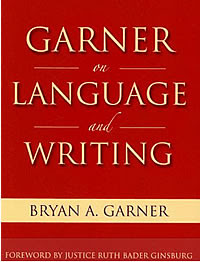
Garner on Language and Writing, copyright American Bar AssociationSince the early 1900s, various courts in the US, UK, and Australia have severely criticized the use of “and/or.” The Australian Supreme Court in a March 2010 case called “and/or” as “an embarrassing expression which endangers accuracy”. A UK court called “and/or” as a “bastard conjunction.”

Garner explains in his book on book on language and writing:
“The real problem with “and/or” is that it plays into the hands of a bad faith-reader. Which one is favorable? And or Or? The bad faith-reader can pick one or the other, or both -- whatever reading is better from that reader’s perspective.”
I replaced “ascertaining” with the simpler phrase “finding out.”

Instead of “in accordance with,” I used “in line with” (Plain Language Lexicon by Cutts).

I replaced the phrase “are financially capable of fulfilling their credit requirements” with “can fulfill their credit requirements.”

In After (Version 2), I removed the cross-reference (“in line with the provisions of Subsection X304.1/4304Q.1 (2008-4312Q.1)/4312N.1”). Prof. Joseph Kimble, editor in chief of The Scribes Journal of Legal Writing, founding director of the Center for Plain Language, and winner of two Burton Awards for Legal Achievement, explains in the Michigan Bar Journal (October 2007):
“Most readers will tell you, if you care to ask, that unnecessary cross-references are at least distracting and at worst irritating. They distract by cluttering the sentence and directing the reader’s attention elsewhere. And they irritate when the reader realizes that the reference was to something already known or entirely obvious.”
In After (Version 3), I changed the phrase “banks/quasi-banks or their subsidiary or affiliate credit card companies” since the two “or” may confuse readers. I used instead the phrase “banks/quasi-banks or their card companies (subsidiary or affiliate).”

BeforeAfter
Before issuing credit cards, banks/quasi-banks and/or their subsidiary/affiliate credit card companies must exercise, in accordance with the provisions of Subsection X304.1/4304Q.1 (2008-4312Q.1)/4312N.1, proper diligence by ascertaining that applicants possess good credit standing and are financially capable of fulfilling their credit requirements.


Version 1

Before issuing credit cards, banks/quasi-banks or their subsidiary or affiliate credit card companies must exercise, in line with the provisions of Subsection X304.1/4304Q.1 (2008-4312Q.1)/4312N.1, proper diligence by finding out if applicants possess good credit standing and can fulfill their credit requirements.

Version 2

Before issuing credit cards, banks/quasi-banks or their subsidiary or affiliate credit card companies must exercise proper diligence by finding out if applicants possess good credit standing and can fulfill their credit requirements.

Version 3

Before issuing credit cards, banks/quasi-banks or their card companies (subsidiary or affiliate) must exercise proper diligence by finding out if applicants possess good credit standing and can fulfill their credit requirements.

Plain English / Plain Language revisions:

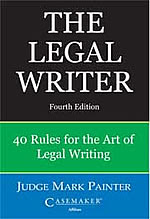
Book by Judge Mark PainterThe original paragraph has two sentences, with the first sentence having 89 words. Plain language experts and resources recommend an average sentence length of 25 words or less. (Garner, Kimble, Cutts, “30 Suggestions to Improve Readability or How to Write for Judges, not like Judges” by Judge Mark Painter, “How to Write Clearly” from the European Commission, and “Plain English Good Practice Guide” from the Government of South Australia)

I broke down the long paragraph by rewriting it, placing the enumeration at the end, not at the beginning, of the sentence (“Guidelines for Drafting and Editing Court Rules” by Garner).

I also used a vertical list. Prof. Kimble says in his article “Lessons in Drafting from the New Federal Rules of Civil Procedure” (Michigan Bar Journal, August 2007):
“The vertical list is one of the drafter’s—and reader’s—best friends. Probably no other technique is more useful for organizing complex information, breaking it down into manageable chunks, avoiding repetition, and preventing ambiguity.”
The phrase “such as, but not limited to” is legalese and can be changed to “such as” without any negative legal effect.

In the phrase shall be “determined and used as basis for setting credit limits”, I changed the doublet “determined and used” into just one word “used.”

The phrase “net take home pay of applicants who are employed” seems to be synonymous with “gross monthly income less deductions for income taxes, premium contributions, loan amortizations, and other deductions.” Is there any other way of computing the net take home pay except by considering these deductions?

BeforeAfter
The net take home pay of applicants who are employed, the net monthly receipts of those engaged in trade or business, or the net worth or cash flow inferred from deposits of those who are neither employed not engaged in trade or business or the credit behavior exhibited by the applicant from his other existing credit cards, or other lifestyle indicators such as, but not limited to, club memberships, ownership and location or residence and motor vehicle ownership shall be determined and used as basis for setting credit limits. The gross monthly income may also be used provided reasonable deductions are estimated for income taxes, premium contributions, loan amortizations and other deductions.The following must be used as basis for setting credit limits:
  1. net take home pay of applicants who are employed;
  2. net monthly receipts of those engaged in trade or business;
  3. net worth or cash flow inferred from deposits of those who are neither employed nor engaged in trade or business;
  4. credit behavior exhibited by the applicants from their other existing credit cards; or
  5. other lifestyle indicators such as:
  1. club memberships;
  2. ownership and location of residence;
  3. motor vehicle ownership.

Plain English / Plain Language revisions:

The phrase “All credit card applications, specifically those solicited by third party representatives/agents” seems to use the word “specifically” wrongly. Could it be a typographical error with “specially” as the intended word? The word “all” negates “specifically.” If ALL credit card applications (whether solicited by the banks/quasi-banks, their subsidiaries or affiliates, or third party representatives/agents) must go through a strict assessment process, then there is no need for the qualifying phrase “specifically those solicited by third party representatives/agents.”

As I discussed above, when referring to obligations, you should use “must” instead of “shall.”

The phrase “representatives/agents” is redundant; either “representatives” or “agents” can be used alone.

“Thereon” is legalese; Cutts suggests the plain English alternative “on it.” I divided the paragraph into two sentences and instead of “thereon,” I used “the information stated on the application.”

In the phrase “validated and verified,” is there a legal or practical difference between the two words? If something has been validated, should it still be verified? I don’t think there’s a real difference between these words; the phrase is redundant, and either word can be used alone.

BeforeAfter
All credit card applications, specifically those solicited by third party representatives/agents, shall undergo a strict credit risk assessment process and the information stated thereon validated and verified by authorized personnel of the banks/quasi-banks and their subsidiary or affiliate credit card companies, other than those handling marketing.All credit card applications must undergo a strict credit risk assessment process. The information stated on the application must be verified by authorized personnel, other than those handling marketing, of the banks/quasi-banks and their subsidiary or affiliate credit card companies.

Plain English / Plain Language revisions:

The amendment in Section 3 of the circular (excluding the paragraph “Transitory provisions”) is a very long paragraph with 235 words; what make it more complicated are the two provisos.

The sub-paragraph beginning with “A table …” has 112 words, with no period and ending with a semicolon after the phrase “application form and billing statement” in the proviso. I divided this long sub-paragraph into three sub-paragraphs, with sub-paragraph 1.2 as my revision of the proviso.

In the phrase “billing cycle/period,” is there really a legal or practical difference between cycle and period? Either word can be used alone.

In the phrase “payment of only the minimum amount due,” the word “payment” is a nominalization (“30 Suggestions to Improve Readability or How to Write for Judges, not like Judges” by Judge Painter, “How to Write Clearly” from the European Commission, and “Plain English Good Practice Guide” from the Government of South Australia). I edited the phrase to read “paying only the minimum amount due.”

I discussed above the reasons against using “and/or.” In paragraph 2 of Section 3, “interest and/or other charges” should be reworded as “interest or other charges, or both” (Scott P. Stolley, Michigan Bar Journal, August 2003).

Kimble down with provided thatKimble in his article “Down with Provided That” (Michigan Bar Journal, July 2004) enumerates the criticisms made by legal drafting experts against provisos. Among others, Kimble cites:
[1] G.C. Thornton, Legislative Drafting 80, 81 (4th ed. 1996): ‘‘On both historical and grammatical grounds the proviso stands condemned. . . . The case against the proviso is established beyond reasonable doubt by the ambiguity and uncertainty of the phrase.’’

[2] Thomas R. Haggard, Legal Drafting in a Nutshell 279 (2d ed. 2003): ‘‘[P]rovided that . . . defies grammatical analysis. Provisos produce single sentences that are often hundreds of words long. Knowledgeable drafters have railed against them for years. Apart from being a grammatical abomination, provided that is ambiguous . . . .’’

[3] David Mellinkoff, Mellinkoff ’s Dictionary of American Legal Usage 520 (1992): ‘‘[The proviso] is one of the horrors of legal writing, in a class with notwithstanding.’’
BeforeAfter
Banks/quasi-banks and their subsidiary or affiliate credit card companies shall also provide the following information to their cardholders:
  1. A table of the applicable fees, penalties and interest rates on credit card transactions, including the period covered by and the manner of and reason for the imposition of such penalties, fees and interest; fees and applicable conversion reference rates for third currency transactions, in plain sight and language, on materials for marketing credit cards, such as brochures, flyers, primers and advertising materials, on credit card application forms, and on credit card billing statements: Provided, That these disclosures are in addition to the full disclosure of the fees, charges and interest rates in the terms and conditions of the credit card agreement found elsewhere on the application form and billing statement; and
  2. A reminder to the card holder in the monthly billing statement, or its equivalent document, that payment of only the minimum amount due or any amount less than the total amount due for the billing cycle/period, would mean the imposition of interest and/or other charges;
Provided, That such table of fees, penalties and interest rates and reminder shall be printed in plain language and in bold black letters against a light or white background, and using the minimum Arial 12 theme font and size, or its equivalent in readability, and on the first page, if the applicable document has more than one page.
Banks/quasi-banks and their subsidiary or affiliate credit card companies must also provide the following information to their cardholders:
  1. A table of (a) the applicable fees, penalties and interest rates on credit card transactions, including the period covered by and the manner of and reason for the imposition of such penalties, fees and interest, and (b) fees and applicable conversion reference rates for third currency transactions; and
  2. A reminder to the card holder in the monthly billing statement, or its equivalent document, that paying only the minimum amount due or any amount less than the total amount due for the billing period, would mean the imposition of interest or other charges, or both.
These disclosures are in addition to the full disclosure of the fees, charges and interest rates in the terms and conditions of the credit card agreement found elsewhere on the application form and billing statement.

The table of fees, penalties and interest rates, and reminder must be printed:
  1. on materials and documents for marketing credit cards such as brochures, flyers, primers and advertising materials, credit card application forms and billing statements; and
  2. in plain language and in bold black letters against a light or white background, and using the minimum Arial 12 theme font and size, or its equivalent in readability, and on the first page, if the document has more than one page.

Plain English / Plain Language revisions:

In the phrase “collection agency/agent,” is there a legal or practical difference between agency and agent? Could “agency” mean an SEC-registered corporation and “agent” mean an individual? Either word can be used alone. Besides, the circular is not consistent since the next sentence uses the phrase “collection agency,” not “collection agency/agent.”

Foe brevity, I changed the phrase “required notification in writing” into “written notification.” From the context, it’s clear that the notice is “required.”

“Prior to” is legalese and the plain English equivalent “before should be used. Kimble says in A Modest Wish List for Legal Writing (79 Mich. B.J. 1574, 1577, 2000):
Prior to takes the booby prize for the most common inflated phrase in legal and official writing. Why would anyone prefer it to before? Try to think of a single literary title or line that uses prior to . . . . By itself, prior to may seem insignificant. But it often leads to clumsy, indirect constructions . . . . More important, a fondness for prior to may indicate a fondness for jargon—and a blind resistance to using plain words. That resistance, that cast of mind, is in large part responsible for the state of legal writing.”
The part reading “of the endorsement of the collection of their account” uses the preposition “of” three times and may cause confusion. Kimble says: “Root out unnecessary prepositional phrases. Question every of. There’s no surer way to tighten legal writing than to eliminate unnecessary prepositional phrases. And as simple as it may sound, there’s no better indicator than the word of.” (Lessons in Drafting from the New Federal Rules of Civil Procedure, Part 4, from Michigan Bar Journal, November 2007) Kimble suggest three ways of eliminating an “of phrase”: using possessives, converting into adjectives, and converting into an –ing form.

Take note that in this section, the phrase “banks/quasi-banks and their subsidiary/affiliate credit card companies” is used. In other instances, the circular uses the phrase “banks/quasi-banks and their subsidiary or affiliate credit card companies.” The difference is that in the first phrase, the conjunction “and” is used. In the other instances, “or” is used. Does the circular mean that BOTH the banks/quasi banks and their subsidiary or affiliate credit card companies must send the notice to the card holder?

Grammatical error in the circular: “personnel” is plural and so “their” should be used instead of “his/her.”

BeforeAfter
Banks/quasi-banks and their subsidiary/affiliate credit card companies shall inform their cardholders in writing of the endorsement of the collection of their account to a collection agency/agent, or the endorsement of their account from one collection agency/agent to another, at least seven (7) days prior to the actual endorsement. The notification shall include the full name of the collection agency and its contact details: Provided, That the required notification in writing shall be included in the terms and conditions of the credit card agreement. Banks/quasi-banks and their subsidiary/affiliate credit card companies shall adopt policies and procedures to ensure that personnel handling the collection of accounts, whether these are in-house collectors, or third-party collection agents, shall disclose his/her full name/true identity to the cardholder.Banks/quasi-banks and their subsidiary/affiliate credit card companies must inform their cardholders in writing that they are endorsing the collection (1) to an agency, or (2) from one collection agency to another, at least seven days before the actual endorsement. The notification must include the full name of the collection agency and its contact details.

The written notice must be included in the terms and conditions of the credit card agreement.

Banks/quasi-banks and their subsidiary/affiliate credit card companies must adopt policies and procedures to ensure that collection personnel, whether in-house or third-party, disclose their full name or true identity to the cardholder.

Plain English / Plain Language revisions:

The phrase “depending on their severity” is a misplaced modifier; it also creates a legal problem. Does “depending on their severity” refer to the sanctions or to the violations? If the phrase refers to the violations (which is what I think the circular means), then the sentence should be edited to read “Depending on their severity, violations shall be subject to any or all of the following sanctions.” In my revision, I also replaced “shall be” to “are.”

BeforeAfter
Section 6.Violations shall be subject to any or all of the following sanctions depending upon their severity.Section 6. Depending on their severity, violations are subject to any or all of the following sanctions:

Plain English / Plain Language revisions:

The phrase “otherwise known as the” is used twice in this section. I deleted it because it is wordy.

BeforeAfter
Section 7. Applicability of Other Laws. In addition to banking laws and BSP regulations, credit card transactions are also covered by other laws such as Republic Act (R.A.) No. 7394, otherwise known as the Consumer Act of the Philippines and R.A. No. 8484, otherwise known as the Access Devices Regulation Act.Section 7. Applicability of Other Laws. In addition to banking laws and BSP regulations, credit card transactions are also covered by other laws such as Republic Act No. 7394 “Consumer Act of the Philippines” and Republic Act No. 8484 “Access Devices Regulation Act”.


Note: You’ll notice that I started some sentences in this post with the conjunction “But.” Our English teachers from kindergarten up to college have taught us never to begin a sentence with the conjunctions “And” or “But.” On the contrary, it is perfectly okay to begin sentences with these conjunctions. In his article “The Truth About Conjunctions as Sentence-Starters” (Michigan Bar Journal, August 2010), Mark Cooney cites current and past US Supreme Court justices who used “But” and “And” to start some of their sentences. These are Chief Justice Roberts, Stevens, Scalia, Kennedy, Thomas, Breyer, Ginsburg, Alito, Sotomayor, Oliver Wendell Holmes, Benjamin Cardozo, and Thurgood Marshall.


Related posts (Before and After revisions of selected government communications):

Sunday, July 03, 2011

Heirs and inheritance (Part 2): Legitimes, free portions, and intestate shares; determining the value of an heir’s share in the inheritance

1. The law that governs the issues on inheritance is the New Civil Code of the Philippines (NCC), not the Family Code..

2.Testate or testamentary succession” refers to situations where the person died leaving a last will. The person who executes a last will is called the “testator.”

The share in the inheritance is called “legitime” and is covered by Arts. 886-914, NCC.

The NCC provides for compulsory heirs” or certain people to whom the testator is obligated to give their legitimes.

In computing the legitimes, the remaining portion of the estate is called the “free portion.” The testator can give this portion to anyone.

3.Legal or intestate succession” refers to situations where the person died without a last will; the share in the inheritance is called “intestate share.” (There is no “free portion” in intestate succession.)

4. “Extrajudicial settlement of estate” is a voluntary agreement among the heirs partitioning the estate (free of debts), executed before a notary public, and published once a week for three weeks in a newspaper of general circulation.

5. A sole heir claiming the whole estate can file an “Affidavit of adjudication by sole heir” with the Register of Deeds (if real property is involved) or with the BIR.

Posted below is a comparative table of legitimes and intestate shares.

Surviving heirs

Legitime


Arts. 886-914, NCC

Intestate share


Illegitimate children

Surviving spouse
1/3

1/3

(Remaining 1/3 is free portion;
Art. 894, NCC)
1/2

1/2

Art. 998, NCC
Illegitimate children

Surviving spouse

Legitimate parents
1/4

1/8

1/2

(Art. 899, NCC; testator may
freely dispose of the remaining 1/8 of the estate.)
1/4

1/4

1/2

Art. 1000, NCC
Illegitimate children


Legitimate parents
1/4 (taken from free portion, Art. 896, NCC)

1/2 (Art. 889, NCC)
1/2

1/2

Art. 991, NCC
Legitimate parents

Surviving spouse
1/2

1/4 (taken from the free portion)

(Art. 893, NCC)
1/2

1/2


Art. 997, NCC
Illegitimate parents

Surviving spouse
1/4

1/4 (Art. 904,
NCC)
1/2

1/2

Arts. 993-994, NCC
Illegitimate children alone1/2 (divided by number of illegitimate children)

Remainder is free portion (Art. 901, NCC)
All (Art. 988, NCC)
Legitimate parents alone1/2; remaining half is free portion (Arts. 889 and 890, NCC)All (Art.
985-987, NCC
)
Illegitimate parents alone1/2 (Art. 903, NCC)All (Art. 993, NCC)
Surviving spouse alone1/2, 1/3, 1/2 (Art. 900, NCC)All (Art.
995, NCC
)
Legitimate children (or their descendants) alone1/2 (divided by the number of children)

Remaining half is free portion (Art. 888, NCC)
All (Art. 980, NCC)
One legitimate child (or descendant)

Surviving spouse
1/2


1/4

Remaining 1/4 is free portion (Art. 892, NCC)
1/2


1/2

(Art. 996, NCC)
Two or more legitimate children (or their descendants)


Surviving spouse
1/2 (divided by the number of children)


Equal to the share of one child

Remainder is free portion (Art. 892, NCC)
Consider spouse as 1 legitimate child and
divide estate by total number (Art. 996, NCC)
Legitimate child

Illegitimate child
1/2

1/2 of each legitimate child (Art. 176, Family Code)

Remainder is free portion (Art. 892, NCC)
Please read Article 176 of the Family Code: computing the legitimes of legitimate and illegitimate children; an illegitimate child gets one-half)
Surviving spouse


Brothers and sisters (nephews and nieces, in case of deceased siblings)
1/2 (remaining half is free portion; Art. 900, NCC)


Not entitled to anything since they are not compulsory heirs; testator may choose to give them something out of the free portion
1/2


1/2 (divided by the number of brothers
and sisters; nephews and nieces of deceased siblings divide among themselves
the share that should have gone to their parents) Art. 1001, NCC

Related posts:

Saturday, July 02, 2011

Heirs and inheritance (Part 1): If your spouse dies without a last will, who will inherit?

Definition of terms:

The New Civil Code of the Philippines (NCC), not the Family Code, governs the issues on inheritance.

Testate or testamentary succession” refers to situations where the person dies leaving a last will; the share in the inheritance is called “legitime.”

Legal or intestate succession” refers to situations where the person died without a last will; the share in the inheritance is called “intestate share.”

The person who dies and whose property is to be divided is called the “decedent.”

Related posts:

Situation A: You and your deceased spouse have children.

1. Only you and your children are entitled to inherit under Article 996 of the New Civil Code of the Philippines. Your deceased spouse’s siblings, parents, or grandparents are excluded.
Art. 996. If a widow or widower and legitimate children or descendants are left, the surviving spouse has in the succession the same share as that of each of the children.
If any or some of your children died before your spouse, their legitimate children will be entitled to inherit by right of representation.

(Read below the steps in computing the inheritance.)

2. If your deceased spouse has illegitimate children, they are entitled to inherit under Article 176 of the Family Code. Please read my post on “how to compute the share of an illegitimate child.”

Situation B: You and your deceased spouse have no children.

1. If your deceased spouse’s parents (either father or mother, or both) are still alive, then you and the parents will inherit under Article 997 of the New Civil Code of the Philippines.
Art. 997. When the widow or widower survives with legitimate parents or ascendants, the surviving spouse shall be entitled to one-half of the estate, and the legitimate parents or ascendants to the other half.
If your spouse’s parents are already dead but other “ascendants” (like grandparents or great-grandparents) are still alive, Article 997 will also apply. Your spouse’s siblings, if any, are not entitled to inherit.

2. If your deceased spouse has illegitimate children, then you and the illegitimate children will inherit under Article 998 of the New Civil Code of the Philippines.
Art. 998. If a widow or widower survives with illegitimate children, such widow or widower shall be entitled to one-half of the inheritance, and the illegitimate children or their descendants, whether legitimate or illegitimate, to the other half.
In simpler terms, you will get 50% of the inheritance while the illegitimate children will divide among themselves the other 50%.

Article 998 applies even if your deceased spouse, at the time of death, had parents or siblings. Only you and the illegitimate children are entitled to inherit. If the illegitimate children died before your spouse, then you and the illegitimate children’s descendants (by right of representation) will inherit.

3. If your deceased spouse has illegitimate children and “ascendants” (parents, grandparents, or great-grandparents), then you, the illegitimate children, and the ascendants will inherit under Article 1000 of the New Civil Code of the Philippines.
Art. 1000. If legitimate ascendants, the surviving spouse, and illegitimate children are left, the ascendants shall be entitled to one-half of the inheritance, and the other half shall be divided between the surviving spouse and the illegitimate children so that such widow or widower shall have one-fourth of the estate, and the illegitimate children the other fourth.
In simpler terms, you will get 25% of the inheritance; your spouse’s illegitimate children will also get 25%; and the ascendants will get 50%.

Your spouse’s siblings, if any, are not entitled to inherit.

4. If your deceased spouse has no ascendants (parents, grandparents, or great-grandparents) or illegitimate children, but has siblings, then you and the siblings will inherit under Article 1001 of the New Civil Code of the Philippines.
Art. 1001. Should brothers and sisters or their children survive with the widow or widower, the latter shall be entitled to one-half of the inheritance and the brothers and sisters or their children to the other half.
In simpler terms, you will get 50% of the inheritance while the brothers and sisters will divide among themselves the other 50%.

The law does not distinguish between siblings of the full or half blood. If your deceased spouse’s father or mother had illegitimate children, these children cannot inherit from your spouse because of the “iron barrier” between the legitimate and illegitimate sides of the family.

If any of the siblings died before your spouse, then that sibling's legitimate children (meaning, your spouse’s nephews or nieces) will inherit by right of representation. These children will divide among themselves the share that should have gone to their parent (the deceased sibling).

5. If your deceased spouse has no illegitimate children, siblings, or ascendants (parents, grandparents, or great-grandparents), then you inherit everything.

Notes:

1. These articles do not apply if your marriage has been declared void, or you are the offending spouse in case of legal separation.

2. Steps in computing the inheritance:
Liquidating the community propertyLiquidating the conjugal partnership property
Art. 103. Upon the termination of the marriage by death, the community property shall be liquidated in the same proceeding for the settlement of the estate of the deceased.

If no judicial settlement proceeding is instituted, the surviving spouse shall liquidate the community property either judicially or extra-judicially within six months from the death of the deceased spouse. If upon the lapse of the six months period, no liquidation is made, any disposition or encumbrance involving the community property of the terminated marriage shall be void.

Should the surviving spouse contract a subsequent marriage without compliance with the foregoing requirements, a mandatory regime of complete separation of property shall govern the property relations of the subsequent marriage.
Art. 130. Upon the termination of the marriage by death, the conjugal partnership property shall be liquidated in the same proceeding for the settlement of the estate of the deceased.

If no judicial settlement proceeding is instituted, the surviving spouse shall liquidate the conjugal partnership property either judicially or extra-judicially within six months from the death of the deceased spouse. If upon the lapse of the six-month period no liquidation is made, any disposition or encumbrance involving the conjugal partnership property of the terminated marriage shall be void.

Should the surviving spouse contract a subsequent marriage without compliance with the foregoing requirements, a mandatory regime of complete separation of property shall govern the property relations of the subsequent marriage.
For example, you and your spouse have four children, and your spouse died leaving one million pesos in property.
  1. Your share in the community property or conjugal partnership property is 50% or five hundred thousand pesos.
  2. The remaining five hundred thousand pesos will be divided among the children, with you counted as one child.
  3. Five hundred thousand pesos divided by five: you and the children will receive one hundred thousand pesos each as inheritance.

Summing up your share (1) in the inheritance and (2) in the community property or conjugal partnership property, as the surviving spouse, you will get six hundred thousand pesos.

Friday, June 24, 2011

DepEd Order No. 88 s. 2010 (Revised Manual of Regulations for Private Schools in Basic Education): Plain English / Plain Language revisions

2010 deped revised manual regulations private schoolsNotes: (1) Please read my post “Plain English, Plain Language or Plain Writing for government offices and private companies in the Philippines.” (2) I conduct seminars for government offices or private companies that want to train their staff in Plain English. Please email me at gtgalacio@yahoo.com or text 0927-798-3138 for details. (3) For interactive grammar exercises, please visit my “Better English resources and exercises” website; I also have interactive quizzes on Plain English / Plain Language. (4) If the tables do not look right, try using Mozilla Firefox or Google Chrome. (5) These revisions are my own and are used only to illustrate Plain English principles. If there are conflicts between my revisions and the official DepEd Order, you must follow the Order.

The Department of Education issued the “2010 Revised Manual of Regulations for Private Schools in Basic Education” through DepEd Order No. 88 s. 2010. Posted below are my plain language revisions of this DepEd Order.

BeforeAfter
1. This Department hereby issues the enclosed “2010 Revised Manual of Regulations for Private Schools in Basic Education” (2010 Revised Manual for brevity) for the guidance and compliance of all concerned stakeholders in basic private education.1. We are issuing the enclosed “2010 Revised Manual of Regulations for Private Schools in Basic Education” (2010 Revised Manual for brevity) for the guidance and compliance of all stakeholders in basic private education.


Plain English / Plain Language revisions: Instead of “This Department,” I used “We” because it is clear from the letterhead and logo that it’s the DepEd issuing the Order.

I deleted “hereby” since it adds nothing and nothing is lost by deleting it. (Drafting Wills, Trusts, and Other Estate Planning Documents: A Style Manual, by Kevin D. Millard)

George Hathaway, chair of the State Bar of Michigan's Plain English Committee since 1983, says about avoiding “hereby”:
“Law students usually write well, but when they get into actual practice, they switch. A fine example is the word hereby. You would be amazed at how many law students know they should not use the word hereby when writing their brief for a legal writing class; when they get out into practice, however, there are 49 other types of documents, and in those 49 other documents, they usually use the word hereby.”
Paragraph 1 of the Order states that for brevity, the manual should be referred to as “2010 Revised Manual.” Yet, paragraph 4 inconsistently uses the complete title “2010 Revised Manual of Regulations for Private Schools in Basic Education.”

I deleted the modifier “concerned” since stakeholders, by definition, would be concerned.

BeforeAfter
2. Any part or provision of the enclosed 2010 Revised Manual, which may be held invalid or declared unconstitutional, shall not affect the effectivity and efficiency of operation and implementation of the remaining parts or provisions thereof.2. Any part or provision of the 2010 Revised Manual that may be held invalid or declared unconstitutional will not affect the validity of its other parts or provisions.


Plain English / Plain Language revisions: The expression “which may be held invalid or declared unconstitutional” (incorrectly) uses the relative pronoun “which” instead of “that.” In formal American English, “that” is used for restrictive clauses while “which” (surrounded by commas) is used for non-restrictive clauses. A clause is non-restrictive if it merely provides additional information and can be removed without changing the meaning. But in paragraph 2 of the Order, removing the “which” clause leads to this nonsensical statement:
“Any part or provision of the enclosed 2010 Revised Manual shall not affect the effectivity and efficiency of operation and implementation of the remaining parts or provisions thereof.”
In British English, there is no distinction between “that” and “which.” Most Filipinos, unaware of the difference between restrictive and non-restrictive clauses, use “which” instead of “that.” (I have also made this mistake on numerous occasions.) But to achieve precision in government communications, we must follow the American English distinction between the relative pronouns “that” and “which.” (Please read Jose Carillo’s English Forum article “Learning to use the relative pronouns confidently.”)

I used “will not” instead of “shall not.”

I used the single word “validity” instead of the wordy and pompous expression “effectivity and efficiency of operation and implementation.”

I deleted “thereof.”

BeforeAfter
3. Any existing Department Circulars, Orders, Memoranda, such as the 1992 Revised Manual of Regulations for Private Schools (8th edition) issued as DECS Order No. 92. s. 1992 dated August 10, 1992, or any parts thereof which are contrary to or inconsistent with any provision of the enclosed 2010 Revised Manual shall be deemed repealed or modified accordingly.3. The 2010 Revised Manual supersedes any contrary or inconsistent provisions of Department Circulars, Orders, Memoranda, such as DECS Order No. 92. s. 1992 dated August 10, 1992 (Revised Manual of Regulations for Private Schools, 8th edition).


Plain English / Plain Language revisions: I used the word “supersedes” instead of the phrase “repealed or modified.”

The Order incorrectly uses the word “deemed.” Bryan A. Garner, editor in chief of Black’s Law Dictionary, in his book on language and writing says that “the word deem should create a legal fiction, not state a truth.”

synthesis legal canadaIn “Synthesis: Legal Reading, Reasoning and Writing in Canada” (by Margaret Elizabeth McCallum, Christina L. Kunz, Deborah A. Schmedem), the authors recommend:

Avoid use of the term “to deem” as a substitute for “to think” or “to consider”. The word means “to treat [a thing] as being something that it is not, or possessing certain qualities it does not possess”. In this technical sense, “deem” is used in statutes to create a legal fiction; for example, a statute that requires applications to be originals signed by the applicant may provide that faxed applications will be deemed to be originals.

BeforeAfter
4. The enclosed 2010 Revised Manual of Regulations for Private Schools in Basic Education shall take effect beginning school year 2010-2011.4. The 2010 Revised Manual of Regulations will take effect beginning school year 2010-2011.


Plain English / Plain Language revisions: The word “enclosed” is used four times in this Order to modify the 2010 Revised Manual. After paragraph 1 where the word is first used, “enclosed” should no longer have been used. All references to the 2010 Revised Manual cannot possibly refer to any other manual. Yet, paragraph 4 inconsistently uses the complete title “2010 Revised Manual of Regulations for Private Schools in Basic Education.”

BeforeAfter
5. Immediate dissemination of and strict compliance with this Order is hereby directed.5. We direct all stakeholders to immediately disseminate and comply with this Order.

Plain English / Plain Language revisions:

“Immediate dissemination of and strict compliance with this Order is hereby directed” is boilerplate text written in the passive voice. I rewrote it using the active voice.


Related posts (Before and After revisions of selected government communications):