Since the late 1970’s and early 1980’s, various private groups (like the Plain English Campaign in the UK) and national governments (like Australia) have been pushing for and implementing “Plain Language” programs. Also referred to as “Plain English” or “Plain Writing,” plain language programs seek to make laws and regulations clear so that can find what they need, understand what they read, and use it to fulfill their needs.
Definitions of Plain English / Plain Language
[1] By Professor Robert Eagleson ( Sydney, Australia)
“Plain English is clear, straightforward expression, using only as many words as are necessary. It is language that avoids obscurity, inflated vocabulary and convoluted sentence construction. It is not baby talk, nor is it a simplified version of the English language.[2] By Martin Cutts, author of “The Plain English Guide” (1995)
“Writers of plain English let their audience concentrate on the message instead of being distracted by complicated language. They make sure that their audience understands the message easily.”
“Plain English is the writing and setting out of essential information in a way that gives a co-operative, motivated person a good chance of understanding the document at first reading, and in the same sense that the writer meant it to be understood.”[3] International Plain Language Working Group (Clarity International, PLAIN, and Center for Plain Language)
“A communication is in plain language if it meets the needs of its audience - by using language, structure, and design so clearly and effectively that the audience has the best possible chance of readily finding what they need, understanding it, and using it.” (Clarity Number 64, November 2010)Countries that have adopted Plain Language programs
Plain Language programs are not limited to the English language. For examples, Sweden has its Plain Swedish program (Klarspak), Canada has a plain language program in French for Quebec lawyers, and Mexico has “Lenguaje ciudadano.” Since the 1980's, numerous countries have adopted plain language programs to better serve their citizens. These are:
- US (Plain Writing Act of 2010; Section 1311, subsection 3, paragraph B of Patient Protection and Affordable Care Act of 2010, the use of plain language in health plans)
- Australia (Victoria Law Reform Commission, 1980’s; Corporations Law Simplification Program and the Tax Law Improvement Project, 1990’s)
- Canada (Legislative Drafting Convention; Lawyers for Literacy Project; Employment Insurance Legislation - Readability Project)
- UK (Inland Revenue’s Tax Law Rewrite 1996: Capital Allowances Act 2001, Income Tax (Earnings and Pensions) Act 2003, Income Tax - Trading and Other Income - Act 2005)
- New Zealand (Law Commission and Parliamentary Counsel Office)
- Ireland (Statute Law Revision)
- Scotland (Law Commission)
- Sweden (Office of the Director-General for Legal Affairs)
- European Union (its executive body, the European Commission, has a plain language campaign called “Fight the Fog”)
- South Africa (National Credit Act of 2005, Section 22 of National Consumer Protection Act of 2011)
- Singapore (In 1996, the Board of Legal Education introduced plain English into the Postgraduate Practice Law Course, a 5-month full time course that culminates in written examinations. The PLC is compulsory for admission to the bar in Singapore; Legal Writing Programme, National University of Singapore, 2001)
- Malaysia (CICC Model Terms of Construction Contracts for Sub-Contract Works, 2007)
- Portugal (SIMPLEGIS)
- Mexico (“Lenguaje ciudadano” or Citizen Language, 2004)
- Chile (“Ley Facil” program of the National Library of Congress, 2005)
- Spain (“Modernizacion del Lenguaje Juridico” 2009)
October 13: International Plain Language Day
 International Plain Language Day (IPLD) takes place on October 13. People and organizations will be hosting events online, in offices and on the streets to mark their support for putting readers first in communication by using plain language. You can read more about the various grassroots activities planned on the IPLD Facebook page. (Source: Pikestaff 52, a publication of Plain Language Commission)
Benefits of Plain Language for government offices
In the US, the Office of Management and Budget implements the Plain Writing law. In its final guidelines, the OMB states that plain language:
- improves public understanding of government communications;
- saves money and increase efficiency;
- reduces the need for the public to seek clarification from agency staff;
- improves public understanding of agency requirements and thereby assist the public in complying with them;
- reduces resources spent on enforcement;
- improves public understanding of agency forms and applications and thereby assist the public in completing them; and
- reduces the number of errors that are made and thus the amount of time and effort that the agency and the public need to devote to correcting those errors.
The US Securities and Exchange Commission has been implementing a Plain English program since 1998. In its free PDF “A Plain English Handbook: How to create clear SEC disclosure documents,” the SEC states the benefits for private businesses in using Plain English:
- Many companies have switched to plain English because it’s a good business decision.
- Companies that communicate successfully with their investors form stronger relationships with them. These companies save the costs of explaining legalese and dealing with confused and sometimes angry investors.
- Plain English versions are easier to read electronically than legalese.
- Investors will be more likely to understand what they are buying and to make informed judgments.
- Brokers and investment advisers can make better recommendations to their clients if they understand documents easily.
- Lawyers reviewing plain English documents catch and correct mistakes more easily.
Buffett is an American investor, industrialist and philanthropist. He was ranked as the world’s richest person in 2008 and is the second richest person in the world as of 2011. In the preface to the “SEC Plain English Handbook” mentioned above, he endorses the use of Plain Language:
Based on interviews with 10,000+ consumers in 7 countries, the Simplicity Index evaluated the simplicity of 500+ brands. Conclusion: Simplicity pays.(Download PDF)
[1] “Complicated processes + unclear communications = frustrated customers”
[2] What is the impact of simplicity on businesses, on customer, and on employees?
Prof. Joseph Kimble, Cooley College of Law, Michigan, USA, is a world-recognized authority on Plain Language. He is also the president of Clarity International, a worldwide organization of lawyers and other individuals committed to the use of Plain Language. His classic study is “Plain Language: Writing for Dollars, Writing to Please” published in The Scribes Journal of Legal Writing, 1997. In the study, Prof. Kimble cited testimonials from officials at trade associations (American Council of Life Insurance, American Gas Association) and at businesses (Shell Oil, Target Stores, Pfizer, Sentry Insurance, Bank of America, General Motors) on the benefits of Plain Language:
This March 1984 study reveals how some companies benefited by simplifying their consumer documents. Their use of plain English improved their corporate image and competitive position, as well as streamlined their procedures, eliminated unnecessary forms, and reduced customer complaints. These companies and their Plain English documents or programs are:
Health literacy and Plain Language
What is health literacy?
The Patient Protection and Affordable Care Act of 2010, Title V, defines health literacy as the degree to which an individual has the capacity to obtain, communicate, process, and understand basic health information and services to make appropriate health decisions. Health literacy is the use of a wide range of skills that improve the ability of people to act on information in order to live healthier lives. These skills include reading, writing, listening, speaking, numeracy, and critical analysis, as well as communication and interaction skills. Health literacy allows the public and personnel working in all health-related contexts to find, understand, evaluate, communicate, and use information. (Calgary Charter on Health Literacy, 2008)
Connection between health literacy and plain language
[1] Plain language is a strategy for making written and oral information easier to understand. It is one important tool for improving health literacy. (Quick Guide to Health Literacy)
[2] Plain Language: A Promising Strategy for Clearly Communicating Health Information and Improving Health Literacy (Office of Disease Prevention and Health Promotion, US Department of Health and Human Services)
[3] Plain language: a strategic response to the health literacy challenge, by Sue Stableford and Wendy Mettger, from Journal of Public Health Policy, Vol. 28, No. 1 (2007), pp. 71-93 Basic principles of Plain Language
According to Prof. Kimble, the basic principles of Plain Language are:
[1] Plain Language means clear and effective communication - the opposite of legalese - and it has a long literary tradition. It does not mean baby talk or dumbing down the language.
[2] Plain Language and precision are complementary goals, not antagonists.
[3] Plain Language is not subverted by the need to use technical terms or terms of art.
[4] Plain Language is not just about vocabulary. Rather, it involves all the techniques for clear communication:
The Office of the Scottish Parliamentary Counsel clarifies what plain language is all about:
[1] Plain language does not tend to come naturally to the author of any work and the legislative drafter is no exception.
[2] Only the clearest thinkers and writers can absorb the most complicated subject-matters and present information in a way which is accessible to a wide audience.
[3] The end product may look easy to write - the reality is that it is much more difficult to simplify than to complicate when writing about a complex topic.
[4] Skill and time are both essential if writing is to be made clearer.
US SEC clarifications and description of Plain English As stated above, the US SEC has been implementing a Plain English program since 1998. In its handbook, the SEC explains what Plain English is all about:
[1] Plain English writing does not mean deleting complex information to make the document easier to understand. For investors to make informed decisions, disclosure documents must impart complex information.
[2] Using plain English assures the orderly and clear presentation of complex information so that investors have the best possible chance of understanding it.
[3] Plain English means analyzing and deciding what information investors need to make informed decisions, before words, sentences, or paragraphs are considered.
[4] A plain English document uses words economically and at a level the audience can understand.
[5] Sentence structure is tight.
[6] Tone is welcoming and direct.
[7] Design is visually appealing. [8] A plain English document is easy to read and looks like it’s meant to be read.
Plain Language initiatives in the Philippines (updated as of October 4, 2013)
[1] Major initiatives
A. 16th Congress (2013 to 2016): Senate Bill No. 1092, "Plain Writing For Public Service Act Of 2013" filed on July 24, 2013 by Sen. Grace Poe. Status: pending in the Committee.
Senate Bill No. 1733 “People's Freedom of Information Act of 2013” filed on September 24, 2013 by Senators Chiz Escudero, Antonio Trillanes IV, Sonny Osmena III, Gregorio Honasan, TG Guingona, Alan Peter Cayetano, JV Ejercito, Sonny Angara, Loren Legarda, and Grace Poe. Status: Pending Second Reading, Special Order 9/24/2013
[2] Minor initiatives
A. House Bill No. 5219 "The Wireless Telephone Consumer Protection Act of 2011" filed by Reps. Diosdado Macapagal Arroyo and Gloria Macapagal Arroyo. Section 10 provides that "wireless telephone service providers must provide bills that are clearly organized describe in plain language the products and services for which charges are imposed, and that conform to format standards established by the Commission." Problems: No guidelines on what is "plain language" and no penalty for non-compliance.
B. Securities and Exchange Commission
1. "Sales and Marketing Guidelines for Derivatives," from SEC document titled "New Rules on the Registration of Long-Term Commercial Papers." The guidelines state that banks must adopt suitability statements that use "simple and plain language" and use "concise and clear messages."
2. "Amended Implementing Rules and Regulations of the Revised Securities Code" (February 2004)
C. Bangko Sentral ng Pilipinas Circular No. 702, Series of 2010 (unfair credit card debt collection practices and their sanctions). The circular provides that credit card billings must be printed in plain language. Problems: No guidelines on what constitutes "plain language" and no penalty for non-compliance.
D. Supreme Court wallsheets for civil cases and criminal cases. Problem: The wallsheets are intended for the public but they still contain a lot of jargon and legalese. For example, "single sala court." But the wallsheets are a step in the right direction.
[3] Private sector initiative:
"A clarion call for simplicity in written communication" by Charlie Agatep of PR and advertising agency Havas Agatep, from Jose Carillo's English Forum
[4] Miscellaneous references:
A. Batas Pambansa Blg. 22 (Bouncing Checks law)
B. Numerous Supreme Court decisions use the term "plain language" but the term is merely a synonym for "plain meaning." The most interesting case I found is "Bermudez vs. CFI of Tayabas" decided in 1917. Back in the early 1900s, the Philippines was an American colony and American jurists served in its Supreme Court. Justice Moreland, in his concurring and dissenting opinion, lamented:
I will be posting in this blog my Plain Language revisions of selected government communications. By showing “before and after” comparisons, I hope that our lawmakers and owners of private businesses will realize the benefits of implementing a Plain Language program.
Resources in Plain Language / Plain English
Plain Language in song
This handbook, and Chairman Levitt’s whole drive to encourage “plain English” in disclosure documents, are good news for me. For more than forty years, I’ve studied the documents that public companies file. Too often, I’ve been unable to decipher just what is being said or, worse yet, had to conclude that nothing was being said.If corporate lawyers and their clients follow the advice in this handbook, my life is going to become much easier.Measurable benefits of using Plain Language in private businesses and government offices
There are several possible explanations as to why I and others sometimes stumble over an accounting note or indenture description. Maybe we simply don’t have the technical knowledge to grasp what the writer wishes to convey. Or perhaps the writer doesn’t understand what he or she is talking about. In some cases, moreover, I suspect that a less-than-scrupulous issuer doesn’t want us to understand a subject it feels legally obligated to touch upon.
Perhaps the most common problem, however, is that a well-intentioned and informed writer simply fails to get the message across to an intelligent, interested reader. In that case, stilted jargon and complex constructions are usually the villains.
This handbook tells you how to free yourself of those impediments to effective communication. Write as this handbook instructs you and you will be amazed at how much smarter your readers will think you have become.
Perhaps the most common problem, however, is that a well-intentioned and informed writer simply fails to get the message across to an intelligent, interested reader. In that case, stilted jargon and complex constructions are usually the villains.
This handbook tells you how to free yourself of those impediments to effective communication. Write as this handbook instructs you and you will be amazed at how much smarter your readers will think you have become.
Write with a specific person in mind. When writing Berkshire Hathaway’s annual report, I pretend that I’m talking to my sisters. I have no trouble picturing them: Though highly intelligent, they are not experts in accounting or finance. They will understand plain English, but jargon may puzzle them. My goal is simply to give them the information I would wish them to supply me if our positions were reversed.
To succeed, I don’t need to be Shakespeare; I must, though, have a sincere desire to inform.
Based on interviews with 10,000+ consumers in 7 countries, the Simplicity Index evaluated the simplicity of 500+ brands. Conclusion: Simplicity pays.(Download PDF)
[1] “Complicated processes + unclear communications = frustrated customers”
[2] What is the impact of simplicity on businesses, on customer, and on employees?
On businesses: Higher customer loyalty“Plain Language: Writing for Dollars, Writing to Please”
On customers: Greater willingness to pay (for simpler experiences, people would pay up to 5.9% more)
On employees: Increased employee motivation (companies that articulate a purpose simply and make it a central purpose for employees foster innovation.)
Prof. Joseph Kimble, Cooley College of Law, Michigan, USA, is a world-recognized authority on Plain Language. He is also the president of Clarity International, a worldwide organization of lawyers and other individuals committed to the use of Plain Language. His classic study is “Plain Language: Writing for Dollars, Writing to Please” published in The Scribes Journal of Legal Writing, 1997. In the study, Prof. Kimble cited testimonials from officials at trade associations (American Council of Life Insurance, American Gas Association) and at businesses (Shell Oil, Target Stores, Pfizer, Sentry Insurance, Bank of America, General Motors) on the benefits of Plain Language:
- Plain Language streamlines procedures and paperwork, makes it easier to train staff, and increases staff productivity and morale.
- It reduces confusion, complaints, and claims, and it improves customer satisfaction.
- It increases sales and raises the company’s standing in the marketplace.
- The US Navy estimated plain English could save it between $250–$300 million every year.
- General Electric saved $275,000 by redrafting manuals into plain English.
- The US Department of Veterans Affairs saved $40,000 redrafting one standard letter into plain English.
- Federal Express, in revising its operations manuals, saved the company $400,000 in the first year.
- Alberta Agriculture, Food, and Rural Development, in revising its forms, saved $3.5 million.
- Customers in three surveys of standard letters from banks unanimously preferred the plain English versions.
- British Telecom cut customer queries by 25 percent by using plain English.
- The Royal Mail (British postal service) saved £500,000 in nine months by redesigning one form in plain English.
- A UK Government Plain English initiative saved £9 million in printing costs.
This March 1984 study reveals how some companies benefited by simplifying their consumer documents. Their use of plain English improved their corporate image and competitive position, as well as streamlined their procedures, eliminated unnecessary forms, and reduced customer complaints. These companies and their Plain English documents or programs are:
- Citibank, N. A. (simplified promissory note)
- Home Owners Warranty Corporation
- J. C. Penny Company, Inc. (consumer information guide)
- Pfizer, Inc. (healthcare education program)
- Roche Laboratories/Hoffman-LaRoche Inc. (medication education)
- Shell Oil Company (“Come to Shell” information campaign)
- Target Stores
- Aetna Life & Casualty (Plain English programs)
- American Council of Life Insurance (understandable life and health insurance policies)
- Insurance Information Institute (consumer information brochures)
- Sentry Insurance
- St. Paul Fire and Marine Insurance Company
Health literacy and Plain Language
What is health literacy?
The Patient Protection and Affordable Care Act of 2010, Title V, defines health literacy as the degree to which an individual has the capacity to obtain, communicate, process, and understand basic health information and services to make appropriate health decisions. Health literacy is the use of a wide range of skills that improve the ability of people to act on information in order to live healthier lives. These skills include reading, writing, listening, speaking, numeracy, and critical analysis, as well as communication and interaction skills. Health literacy allows the public and personnel working in all health-related contexts to find, understand, evaluate, communicate, and use information. (Calgary Charter on Health Literacy, 2008)
Connection between health literacy and plain language
[1] Plain language is a strategy for making written and oral information easier to understand. It is one important tool for improving health literacy. (Quick Guide to Health Literacy)
[2] Plain Language: A Promising Strategy for Clearly Communicating Health Information and Improving Health Literacy (Office of Disease Prevention and Health Promotion, US Department of Health and Human Services)
[3] Plain language: a strategic response to the health literacy challenge, by Sue Stableford and Wendy Mettger, from Journal of Public Health Policy, Vol. 28, No. 1 (2007), pp. 71-93
Low health literacy is a major challenge confronting American and international health organizations. Research in the past decade has documented the prevalence of limited literacy and limited health literacy skills among adults worldwide. This creates a major policy challenge: how to create text-based health information - a common method of health communication - that is accessible to the public. Plain language is a logical, flexible response. While touted by American, Canadian, and European health policy makers, adoption and promotion of plain language standards and skills in health-focused organizations have lagged. Most text-based health information continues to be too hard for most adults to read. Barriers to more rapid diffusion of plain language are reflected in a set of myths perpetuated by critics. These myths are identified and refuted. While plain language is only one of many broad-based solutions needed to address low health literacy, the benefits to everyone demand increased use by health organizations.
View more presentations from Ed_doc_Peggy
According to Prof. Kimble, the basic principles of Plain Language are:
[1] Plain Language means clear and effective communication - the opposite of legalese - and it has a long literary tradition. It does not mean baby talk or dumbing down the language.
[2] Plain Language and precision are complementary goals, not antagonists.
[3] Plain Language is not subverted by the need to use technical terms or terms of art.
[4] Plain Language is not just about vocabulary. Rather, it involves all the techniques for clear communication:
- planning the document;
- designing it;
- writing clear sentences;
- using plain words; and
- testing the document whenever possible on typical readers.
The Office of the Scottish Parliamentary Counsel clarifies what plain language is all about:
[1] Plain language does not tend to come naturally to the author of any work and the legislative drafter is no exception.
[2] Only the clearest thinkers and writers can absorb the most complicated subject-matters and present information in a way which is accessible to a wide audience.
[3] The end product may look easy to write - the reality is that it is much more difficult to simplify than to complicate when writing about a complex topic.
[4] Skill and time are both essential if writing is to be made clearer.
US SEC clarifications and description of Plain English As stated above, the US SEC has been implementing a Plain English program since 1998. In its handbook, the SEC explains what Plain English is all about:
[1] Plain English writing does not mean deleting complex information to make the document easier to understand. For investors to make informed decisions, disclosure documents must impart complex information.
[2] Using plain English assures the orderly and clear presentation of complex information so that investors have the best possible chance of understanding it.
[3] Plain English means analyzing and deciding what information investors need to make informed decisions, before words, sentences, or paragraphs are considered.
[4] A plain English document uses words economically and at a level the audience can understand.
[5] Sentence structure is tight.
[6] Tone is welcoming and direct.
[7] Design is visually appealing. [8] A plain English document is easy to read and looks like it’s meant to be read.
Plain Language initiatives in the Philippines (updated as of October 4, 2013)
[1] Major initiatives
A. 16th Congress (2013 to 2016): Senate Bill No. 1092, "Plain Writing For Public Service Act Of 2013" filed on July 24, 2013 by Sen. Grace Poe. Status: pending in the Committee.
Senate Bill No. 1733 “People's Freedom of Information Act of 2013” filed on September 24, 2013 by Senators Chiz Escudero, Antonio Trillanes IV, Sonny Osmena III, Gregorio Honasan, TG Guingona, Alan Peter Cayetano, JV Ejercito, Sonny Angara, Loren Legarda, and Grace Poe. Status: Pending Second Reading, Special Order 9/24/2013
SEC. 20. Use of Plain Language. - Every government agency shall endeavor to use plain language in their communications orders, compliance, requirements or instructions issued to implement the provisions of this Act. The government agencies shall translate key information into major Filipino languages and present them in popular form and means.B. 15th Congress (2010 to 2013):
(1) To carry out the provision of this Act, the Civil Service Commission (CSC) is designated to issue guidelines on the use of plain language to suit the needs of the requesting party;
(2) The CSC shall provide the necessary training to employees of each government agency in using plain language in public documents;
(3) All departments, agencies and instrumentalities of the national government, including government-owned or controlled corporations, local government units and state colleges and universities shall designate an official responsible for implementing the plain language; and
(4) Website contents, including, but not limited to financial data, notices and other technical and legal documents, of government agencies must also be written in plain language to ensure that these information are easy to read, understand and use.
- Senate Bill No. 1770 "Plain Language in Health Insurance Act" filed by Sen. Miriam Defensor-Santiago
- Senate Bill No. 1859 Plain Language Act "An Act To Enhance Citizen Access To Government Information And Services By Establishing That Government Documents Issued To The Public Must Be Written Clearly And In Plain Language" filed by Sen. Miriam Defensor-Santiago
- House Bill No. 34 "Plain Language Law of 2010" filed by Representative Rene Relampagos
- House Bill requiring use of Plain Language in insurance policies filed by Rep. Narciso D. Santiago III (Party-List, ARC)
[2] Minor initiatives
A. House Bill No. 5219 "The Wireless Telephone Consumer Protection Act of 2011" filed by Reps. Diosdado Macapagal Arroyo and Gloria Macapagal Arroyo. Section 10 provides that "wireless telephone service providers must provide bills that are clearly organized describe in plain language the products and services for which charges are imposed, and that conform to format standards established by the Commission." Problems: No guidelines on what is "plain language" and no penalty for non-compliance.
B. Securities and Exchange Commission
1. "Sales and Marketing Guidelines for Derivatives," from SEC document titled "New Rules on the Registration of Long-Term Commercial Papers." The guidelines state that banks must adopt suitability statements that use "simple and plain language" and use "concise and clear messages."
2. "Amended Implementing Rules and Regulations of the Revised Securities Code" (February 2004)
"A prospectus must be worded in plain language which is understandable by an ordinary person." (3, B)
"All information that is required to be included in the prospectus shall be clearly understandable without the need to refer to SEC Form 12-1 or to the general rules and regulations. The goal of registration (disclosure for the benefit of investors) involves, among other things, the use of language that can be understood by the person to whom it is addressed. Failure to use language that is clear and understandable to the investor may defeat the purpose of the prospectus." (I, v)
"The Client Agreement shall be in a language understood by the client. The registered persons who deal directly with clients shall explain to the client the contents of the agreement." (3, B Client Agreement)Problems: The SEC documents do not provide standards for what constitutes "plain language" or "clear and understandable language." No penalties are provided for non-compliance.
C. Bangko Sentral ng Pilipinas Circular No. 702, Series of 2010 (unfair credit card debt collection practices and their sanctions). The circular provides that credit card billings must be printed in plain language. Problems: No guidelines on what constitutes "plain language" and no penalty for non-compliance.
D. Supreme Court wallsheets for civil cases and criminal cases. Problem: The wallsheets are intended for the public but they still contain a lot of jargon and legalese. For example, "single sala court." But the wallsheets are a step in the right direction.
[3] Private sector initiative:
"A clarion call for simplicity in written communication" by Charlie Agatep of PR and advertising agency Havas Agatep, from Jose Carillo's English Forum
[4] Miscellaneous references:
A. Batas Pambansa Blg. 22 (Bouncing Checks law)
Section 3. Duty of drawee; rules of evidence. - It shall be the duty of the drawee of any check, when refusing to pay the same to the holder thereof upon presentment, to cause to be written, printed, or stamped in plain language thereon, or attached thereto, the reason for drawee's dishonor or refusal to pay the same:Enacted in 1979, BP 22 is the most violated criminal offense in the Philippines. The Supreme Court has ruled numerous times on BP 22's provisions. But these rulings have never clarified the term "plain language" in Section 3.
B. Numerous Supreme Court decisions use the term "plain language" but the term is merely a synonym for "plain meaning." The most interesting case I found is "Bermudez vs. CFI of Tayabas" decided in 1917. Back in the early 1900s, the Philippines was an American colony and American jurists served in its Supreme Court. Justice Moreland, in his concurring and dissenting opinion, lamented:
"Is this not plain language? Is it not direct language? Is it not strong language? Is it not conclusive language? Yet does the court follow it?"Plain English / Plain Language revisions: “Before and after” comparisons of selected government communications
I will be posting in this blog my Plain Language revisions of selected government communications. By showing “before and after” comparisons, I hope that our lawmakers and owners of private businesses will realize the benefits of implementing a Plain Language program.
- Plain Language revisions: Senate rules of procedure in the impeachment of Chief Justice Corona
- Plain Language revisions: DSWD Travel Clearance for Minors
- Plain Language revisions: Public Attorney’s Office guidelines
- Plain Language revisions: RA 9994 Expanded rights of senior citizens
- Plain Language revisions: PDIC notice to Banco Filipino depositors
- Plain Language revisions: PVAO educational benefits
- Plain Language revisions: Pantawid Pasada Program guidelines
- Plain Language revisions: BSP Circular No. 702, Series of 2010 (protection of credit card holders)
- Plain Language revisions: DepEd Order No. 88 s. 2010
Resources in Plain Language / Plain English
Free online training courses in Plain Language
Plain Language videos
"Writing English as a Second Language" by William Zinsser (a talk to the incoming international students at the Columbia Graduate School of Journalism) | Plain Language groups you can join
Slideshare presentations about Plain Language
|
Plain Language checklists
| Plain Language handbooks
|
Plain Language includes visual design
"Making Data Meaningful" from UN Economic Commission for Europe
| Website design, usability, and Plain Language
Health literacy and Plain Language
|
Online resources on Plain English / Plain Language by Google
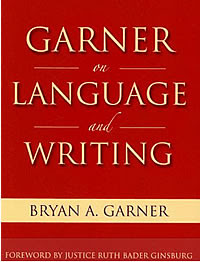
Garner on Language and Writing, by Bryan A. Garner, editor of Black’s Law Dictionary, 749 pages (copyright by American Bar Association) Topics include learning to write, style, persuasion, contractual and legislative drafting, grammar, lexicography, writing in law school, writing in law practice, judicial writing, and all the literature relating to these diverse subjects.
Plain Language Medical Dictionary The Plain Language Medical Dictionary widget is a project of the University of Michigan Taubman Health Sciences Library as part of the Michigan Health Literacy Awareness project.